
Reliable Motorcycle Transport Services You Can Trust

Motorcycle enthusiasts know that their bikes are more than just machines; they are a passion, a lifestyle, and often a significant investment. Whether you are relocating, attending a motorcycle event, or simply need to transport your bike for maintenance, finding a reliable motorcycle transport service is crucial. In this blog post, we will explore the key factors to consider when choosing a transport service, the different types of transport options available, and how to ensure your motorcycle arrives safely and securely at its destination.

Understanding Your Transport Needs
Before diving into the specifics of motorcycle transport services, it’s essential to understand your unique needs. Here are some questions to consider:
What is the distance of the transport? Are you moving your motorcycle across town, or is it a long-distance move?
What type of motorcycle do you have? Different bikes may require different handling and transport methods.
What is your budget? Transport costs can vary widely based on distance, service type, and additional features.
By clarifying your needs, you can narrow down your options and find a service that fits your requirements.
Types of Motorcycle Transport Services
When it comes to transporting your motorcycle, there are several options available. Each has its pros and cons, so it’s essential to choose the one that best suits your needs.
Open Transport
Open transport is the most common and cost-effective method for motorcycle transport. Your bike is loaded onto an open trailer, exposed to the elements during transit.
Pros:
Lower cost compared to enclosed transport.
Faster loading and unloading times.
Cons:
Increased risk of damage from weather or road debris.
Less security against theft.
Enclosed Transport
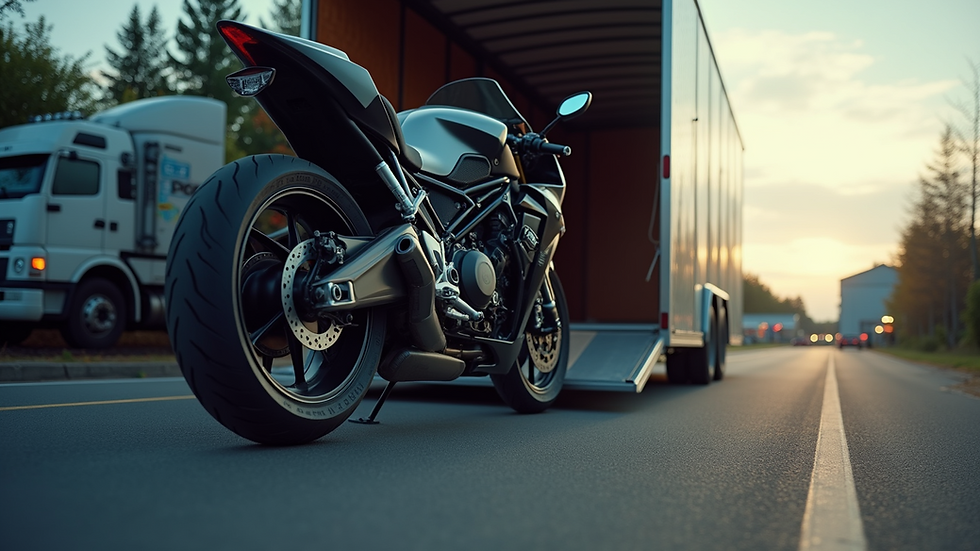
Enclosed transport provides a higher level of protection for your motorcycle. Your bike is loaded into a fully enclosed trailer, shielding it from the elements and potential damage.
Pros:
Maximum protection from weather and road debris.
Enhanced security against theft.
Cons:
Higher cost compared to open transport.
May take longer to schedule due to limited availability.
Door-to-Door Service
Door-to-door service means that the transport company will pick up your motorcycle from your location and deliver it directly to your destination. This service is convenient for those who prefer not to transport their bike to a terminal.
Pros:
Convenience of having your motorcycle picked up and delivered.
Less hassle for the owner.
Cons:
May be more expensive than terminal-to-terminal services.
Availability may vary based on location.
Terminal-to-Terminal Service
With terminal-to-terminal service, you drop off your motorcycle at a designated terminal, and it is transported to another terminal for you to pick up. This option can be more affordable but requires more effort on your part.
Pros:
Often more cost-effective than door-to-door service.
Greater flexibility in scheduling.
Cons:
Requires you to transport your motorcycle to and from terminals.
Less convenience compared to door-to-door options.
Factors to Consider When Choosing a Transport Service
Selecting a reliable motorcycle transport service involves more than just picking the cheapest option. Here are some critical factors to consider:
Reputation and Reviews
Research the reputation of the transport service. Look for customer reviews and testimonials to gauge their reliability and quality of service. Websites like Trustpilot and Google Reviews can provide valuable insights.
Insurance Coverage
Ensure that the transport service offers adequate insurance coverage for your motorcycle during transit. This coverage will protect you in case of damage or loss. Always read the fine print to understand what is covered.
Experience and Expertise
Choose a transport service with experience in handling motorcycles. Companies that specialize in motorcycle transport will have the necessary equipment and knowledge to ensure your bike is handled properly.
Communication
A reliable transport service should maintain clear communication throughout the process. They should provide updates on the status of your motorcycle and be available to answer any questions you may have.
Pricing Transparency
Be wary of hidden fees. A trustworthy transport service will provide a clear breakdown of costs upfront, so you know exactly what you are paying for.
Preparing Your Motorcycle for Transport
Once you have selected a transport service, it’s time to prepare your motorcycle for transport. Here are some steps to follow:
Clean Your Motorcycle
Cleaning your motorcycle before transport allows you to inspect it for any existing damage. Take photos of your bike from multiple angles for your records.
Remove Accessories
If your motorcycle has any removable accessories, such as saddlebags or GPS units, take them off before transport. This will reduce the risk of damage during transit.
Check Fluid Levels
Ensure that your motorcycle’s fluid levels are appropriate. It’s often recommended to have a full tank of gas for long-distance transport, but check with your transport service for their specific requirements.
Secure Loose Parts
Make sure that any loose parts are secured or removed. This includes mirrors, windshields, and any other components that could be damaged during transport.
Document Existing Damage
As mentioned earlier, take photos of your motorcycle before transport. This documentation will be helpful if you need to file a claim for any damage that occurs during transit.
What to Expect During Transport
Understanding what happens during the transport process can help ease any concerns you may have. Here’s a general overview of what to expect:
Pickup: The transport service will arrive at your location to pick up your motorcycle. Ensure that you are available to hand over the keys and any necessary paperwork.
Loading: Your motorcycle will be carefully loaded onto the transport vehicle. The crew should use proper techniques to secure your bike and prevent any movement during transit.
Transit: Depending on the distance and type of service, your motorcycle will be transported to its destination. Stay in touch with the transport service for updates on the status of your bike.
Delivery: Upon arrival, the transport service will unload your motorcycle and ensure it is in the same condition as when it was picked up. Inspect your bike thoroughly before signing off on the delivery.
Common Mistakes to Avoid
When choosing a motorcycle transport service, there are several common mistakes to avoid:
Not Researching: Failing to research the transport service can lead to poor choices. Take the time to read reviews and ask for recommendations.
Ignoring Insurance: Not verifying insurance coverage can leave you vulnerable in case of damage or loss. Always ensure you have adequate protection.
Overlooking Preparation: Neglecting to prepare your motorcycle for transport can result in damage. Follow the preparation steps outlined above.
Choosing Based on Price Alone: While cost is important, it shouldn’t be the only factor. Consider the overall value and reputation of the service.
Conclusion
Transporting your motorcycle doesn’t have to be a stressful experience. By understanding your needs, exploring your options, and choosing a reliable transport service, you can ensure that your bike arrives safely at its destination. Remember to prepare your motorcycle properly and stay informed throughout the process. With the right approach, you can trust that your motorcycle will be in good hands.
Now that you have the knowledge to choose a reliable motorcycle transport service, take the next step and start researching your options today!

Comments